
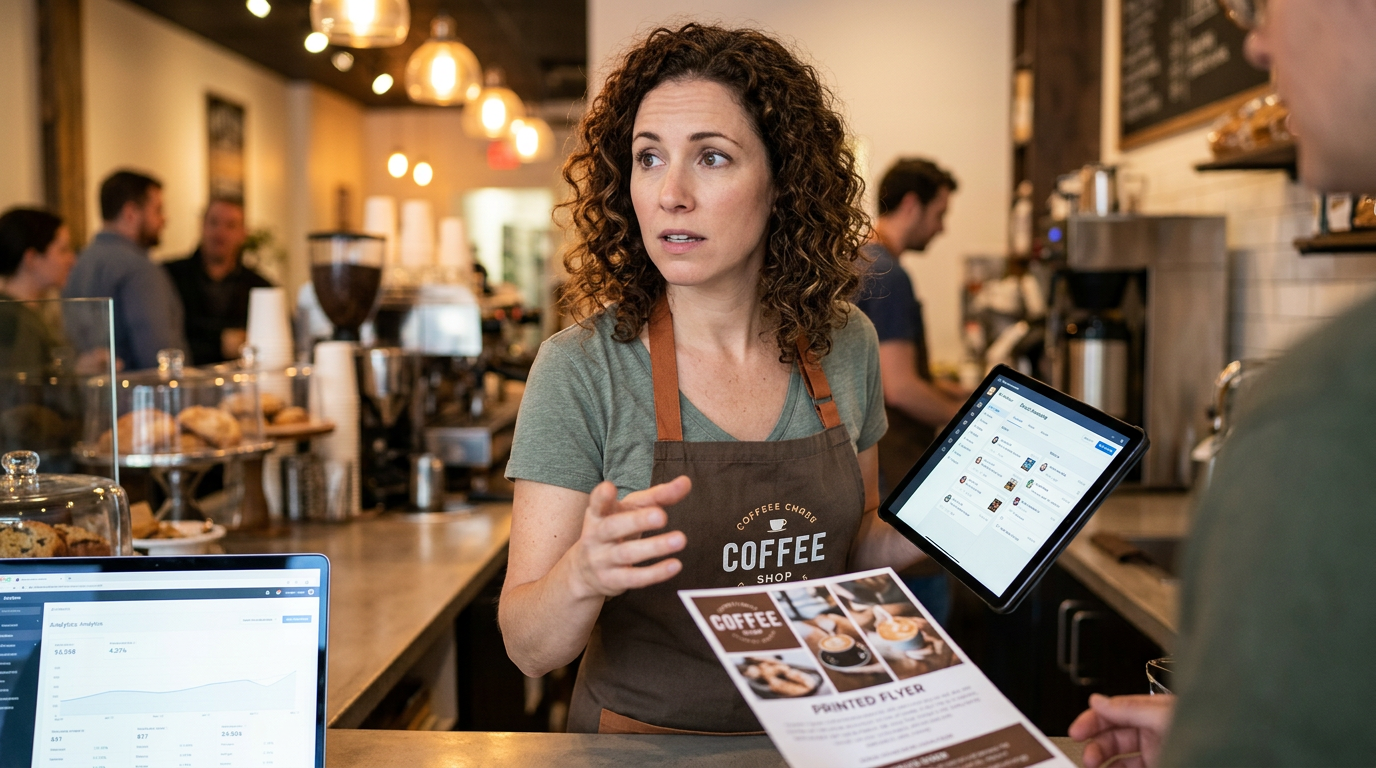
 Running a small business means juggling sales, service, operations, and marketing all at once. One moment you are helping customers, and the next you are expected to write emails, post on social media, update your website, and figure out why your last campaign did not deliver results.
That is where AI for small business marketing can make a real difference.
AI is not just for large companies with large teams. It gives small businesses a practical way to save time, improve consistency, and make better marketing decisions. From content creation to audience targeting and follow-up automation, AI helps smaller teams do more without losing the human touch that makes their brand stand out.
Why AI Matters for Small Business Marketing
Marketing has become more demanding. Customers now discover businesses through search engines, email, social media, review sites, online videos, and local listings. At the same time, they expect fast replies, relevant content, and personalized experiences.
For small businesses, keeping up can feel overwhelming.
AI helps reduce that pressure. It can support content writing, identify trends, recommend better timing for campaigns, and uncover patterns in customer behavior. Instead of relying only on instinct, small businesses can combine experience with real insight.
That matters because time is often the biggest marketing challenge. Many small businesses do not have a dedicated marketing department. The owner or a small team is usually responsible for everything. AI helps lighten that load and keeps marketing moving.
The Shift From Guesswork to Smarter Decisions
A lot of small business marketing still runs on trial and error. While instinct and local knowledge matter, they do not always reveal what is working best.
AI helps turn data into practical direction. It can look at email opens, website visits, clicks, purchases, and customer feedback to highlight what is getting results. This helps businesses spend less time guessing and more time improving what already works.
That does not mean marketing becomes robotic. It simply means decisions are backed by better information. Small businesses still bring the strategy, voice, and customer understanding. AI helps make those strengths easier to apply.
What AI Can Do Without Replacing Human Creativity
 One of the biggest concerns about AI in marketing is that it will make content feel cold or generic. That only happens when businesses use it carelessly.
Used properly, AI supports creativity rather than replacing it.
It can help brainstorm ideas, create first drafts, rewrite content for different platforms, and clean up grammar or structure. That frees up time for the human side of marketing: storytelling, empathy, tone, personality, and brand positioning.
Small businesses win because they feel real and relatable. AI should help protect that advantage by removing repetitive work, not by replacing authentic communication.
Understanding AI Marketing Tools in Plain English
AI tools can sound complicated, but most of them do one of three things: they create, they analyze, or they automate.
Tools that create help with blog drafts, product descriptions, social captions, and email content. Tools that analyze help identify customer behavior, campaign performance, and trends. Tools that automate handle repetitive tasks such as post scheduling, follow-up emails, and lead tagging.
Many platforms now combine these features, which is why AI is already built into tools many small businesses use every day.
Generative AI for Content and Ideas
Generative AI is often the easiest starting point because it solves one of the biggest challenges in small business marketing: content creation.
Small businesses need blog posts, website copy, email campaigns, social media captions, and more. That takes time. Generative AI helps speed up the process by turning rough ideas, notes, or prompts into usable first drafts.
For example, a local service company can use AI to draft FAQ content. A retailer can create product descriptions more quickly. A consultant can turn webinar notes into an article. In each case, AI speeds up the writing process while the business adds the voice, experience, and final polish.
The best results happen when AI is treated as a starting point, not a finished product.
Predictive AI for Timing, Targeting, and Trends
If generative AI helps create the message, predictive AI helps improve where, when, and how that message is used.
Predictive AI looks at patterns in customer behavior to suggest likely outcomes. It can help identify the best time to send an email, which audience is most likely to convert, or which customers may be losing interest.
For small businesses, this means less wasted effort. Instead of spreading time and money across the wrong audience or channel, they can focus on the people and tactics most likely to deliver results.
Building a Smarter Marketing Strategy With AI
AI becomes even more valuable when it supports the full marketing strategy instead of just one task at a time.
A strong strategy connects the audience, the message, the channel, and the desired action. AI helps small businesses see those connections more clearly. It can reveal which channels bring in strong leads, which content supports conversions, and where follow-up is falling short.
That makes it easier to focus on what matters most instead of trying to be everywhere at once.
Finding the Right Audience Faster
One of the most expensive marketing mistakes is speaking to the wrong audience. Even a strong offer can struggle if it is shown to people who are not the right fit.
AI helps improve audience targeting by analyzing behavior, search activity, purchases, and engagement. It can show who responds to discounts, who values convenience, who needs more education before buying, and who is ready to act quickly.
When small businesses understand who they are talking to, their marketing becomes clearer, more relevant, and more effective.
Creating Buyer Personas From Real Behavior
Traditional buyer personas are often based on assumptions. AI helps make them more useful by grounding them in real customer behavior.
Instead of guessing what people care about, small businesses can use data from website visits, abandoned carts, reviews, support questions, and email engagement. This helps reveal what motivates customers, what creates hesitation, and which messages build trust.
That leads to stronger copy, better offers, and more relevant campaigns.
Planning Campaigns With Less Waste
Many weak campaigns fail before they even launch. The message is too broad, the audience is unclear, or the follow-up is disconnected.
AI helps businesses plan with more structure. It can support message development, identify likely objections, and help align social posts, landing pages, ads, and emails around one clear campaign idea.
That consistency matters. Customers are more likely to act when they see the same clear message repeated across different channels.
Content Marketing Made Easier
Content marketing works, but it is demanding. Small businesses need a steady flow of useful content to build visibility, trust, and search traffic.
AI makes that easier by reducing the effort needed to move from idea to execution. It can help generate topics, outline articles, summarize customer questions, and create first drafts. That lowers the barrier to publishing consistently.
And consistency is important. Content marketing rarely works through one post alone. It works by showing up regularly with helpful, relevant information.
Blog Posts, Social Captions, and Email Drafts
AI is especially useful for the daily writing tasks that often get delayed.
For blog posts, it can suggest titles, structure sections, and help draft content. For social media, it can generate captions, hooks, and calls to action. For email marketing, it can support welcome emails, promotions, reminders, and re-engagement campaigns.
This helps small businesses produce more content without starting from scratch each time.
Repurposing One Idea Into Multiple Formats
One of the smartest uses of AI is repurposing content.
A single idea can become a blog post, newsletter, short social post, FAQ entry, or video script. A quick customer tip can be turned into content for multiple platforms. A product explanation can become a website section, email, and social caption.
This saves time and improves message consistency. Instead of constantly inventing new ideas, businesses can get more value from the ideas they already have.
AI in Social Media, Email, and Customer Retention
AI is not just helpful for content. It is also valuable in the channels that shape everyday customer relationships.
In social media, AI can support scheduling, caption writing, and performance analysis. In email marketing, it can help with subject lines, segmentation, and automation. In customer retention, it can identify when a buyer may need a reminder, follow-up, or personalized offer.
This matters because many small businesses focus heavily on getting the first sale and not enough on staying connected afterward.
Scheduling, Personalization, and Follow-Up at Scale
Small businesses often struggle with consistency, not because they do not care, but because they are busy.
AI helps turn good intentions into systems. It can support regular posting, schedule emails, personalize communication based on behavior, and trigger follow-up messages when a customer takes a specific action.
A new subscriber may need an introduction. A repeat customer may respond better to a loyalty offer. A customer who left items in a cart may need a reminder. AI helps make those touchpoints more timely and relevant.
When used thoughtfully, automation does not make marketing feel less personal. It helps businesses stay present in a way that feels more helpful and consistent.
Choosing Affordable AI Tools Without Overcomplicating Your Stack
One of the fastest ways to create frustration is to adopt too many AI tools at once.
Most small businesses do not need a large stack of software. They need a few tools that solve real problems. A business struggling with content might benefit most from a writing assistant. A company with weak follow-up may get more value from an email platform or CRM with automation features.
The best tool is not the one with the most features. It is the one that fits into your workflow, gets used consistently, and saves real time.
A simple approach works best. Start with one or two tools that solve your biggest bottleneck. Use them well before adding anything else.
Common Mistakes, Limits, and Ethical Concerns
AI is helpful, but it is not perfect. One of the biggest mistakes businesses make is assuming that fast content is automatically good content.
AI can create polished wording, but that does not guarantee accuracy, originality, or brand fit. It can also miss the nuance that comes from real customer experience. That is why editing is essential.
Small businesses should also use AI responsibly. It should not be used to fake testimonials, make misleading claims, or publish unchecked information. Details related to pricing, policies, legal language, or product specifications should always be reviewed by a human.
Privacy matters too. Businesses should be careful with how customer data is used inside AI-enabled tools. The goal should always be to improve service and communication without compromising trust.
Conclusion
AI helps small businesses do marketing better by making the work faster, more organized, and more effective. It supports content creation, improves audience targeting, strengthens follow-up, and helps businesses stay more consistent across channels.
The businesses that benefit most are not the ones chasing every new tool. They are the ones using AI with purpose. They know their audience, understand their voice, and use AI as support rather than a replacement for human judgment.
For small businesses, that can be a powerful advantage. With the right approach, AI does not make marketing less human. It helps smaller teams show up more clearly, more consistently, and with less wasted effort. We have a suite of AI tools you can use to market, and run your business. ~it also includes a money back guarantee. If you’re not happy with it for any reason, simply discontinue and we’ll refund your purchase.
FAQs
Can AI really help a very small business with little or no marketing team?
Yes. AI is especially useful for small businesses because it helps one person or a small team handle content, follow-up, and routine marketing tasks more efficiently.
Will AI make my marketing sound robotic?
Only if you publish raw AI content without editing it. The best results come when AI creates the draft and a human adds the final tone, examples, and personality.
What is the best first AI use case for a small business?
Start with the area causing the most friction. For many businesses, that is content creation. For others, it may be email automation, audience targeting, or customer follow-up.
Is AI marketing expensive?
It does not have to be. Many existing tools already include useful AI features. The key is to avoid overbuying and focus on tools that solve specific problems.
What should small businesses avoid when using AI in marketing?
Avoid overtrusting it, publishing without review, and relying on it for final judgment. AI should support the work, while humans handle accuracy, tone, and strategy.